
Vapi Retell Integration for Production Call Ops
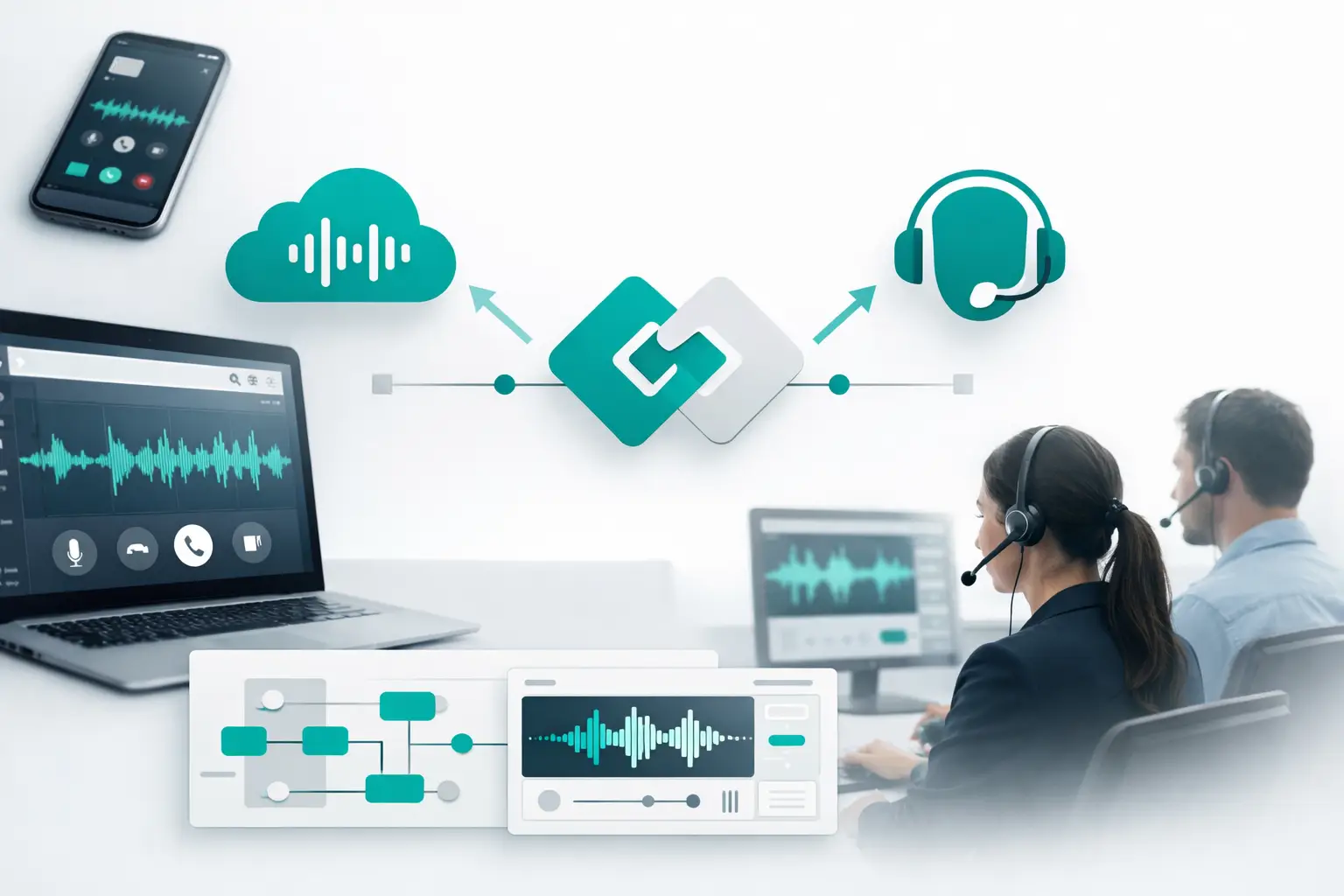
A Vapi Retell integration becomes necessary when an AI voice agent moves beyond a promising demo and enters real calling operations. At that point, the agent is only one part of the system. It needs the right phone number, lead context, routing rules, disposition logic, CRM updates, escalation paths, and reporting to operate reliably at volume.
The common mistake is treating Vapi or Retell as the entire contact center. Both can power capable voice agent experiences. Neither should be expected to replace the operational layer that manages campaigns, carriers, records, channels, teams, and exceptions across a revenue operation.
What a Vapi Retell Integration Should Actually Mean
Vapi and Retell are AI voice platforms, not endpoints that need to be connected to each other call by call. For most businesses, the practical goal is to connect either provider - or both, where appropriate - to a shared operating layer.
That layer receives the business event: a form submission, an appointment request, a missed inbound call, a new record in the CRM, or a support issue. It determines which agent should respond, which carrier and number should place or receive the call, what context the agent needs, and what happens after the conversation ends.
Without that layer, teams tend to build direct point-to-point connections. Vapi sends a webhook to one automation tool. Retell writes a call result somewhere else. The CRM gets updated through custom logic. SMS follow-up runs from another platform. A routing change requires a developer. Reporting becomes an exercise in matching timestamps across dashboards.
That architecture can work for a pilot. It becomes expensive to maintain when multiple campaigns, locations, teams, and lead sources are involved.
One operating model, multiple agent providers
A production-ready integration standardizes the workflow around the agent rather than forcing the business to standardize on one agent provider forever. The same operational framework should work whether a team uses Vapi for an inbound receptionist, Retell for qualification, or different agents by campaign and business unit.
The agent needs a defined contract. It receives the caller or lead record, campaign metadata, prior interactions, available appointment inventory, and clear transfer destinations. It returns structured outcomes such as qualification status, appointment result, call disposition, transcript, recording reference, summary, and requested follow-up.
Once those inputs and outputs are standardized, changing providers does not require rebuilding the rest of the call operation. That matters when an agent's performance, language support, latency, pricing, or feature set changes over time.
Build the Operational Layer Before Adding More Agents
More agents do not fix an unclear workflow. Before configuring prompts or testing voices, define how the call operation should behave under ordinary conditions and exceptions.
Start with routing. An inbound caller may need to reach an AI receptionist, a specific branch, a live team member, or an after-hours workflow. That decision may depend on the phone number dialed, business hours, location, caller history, language, campaign, or CRM ownership. The routing logic should exist outside a single agent prompt so operations teams can adjust it without rewriting conversational behavior.
Carrier management comes next. A production environment needs visibility into which carrier is handling traffic, which numbers are assigned to which campaigns, and what fallback route is available when a provider experiences an issue. Number health and call delivery are operational concerns, not tasks for the AI agent itself.
Then comes data flow. The CRM cannot receive a vague note that says, "AI call completed." Sales and service teams need usable fields: whether the contact was reached, qualification stage, appointment time, transfer outcome, follow-up task, objection category, and summary. The integration should map those outcomes to the fields and pipeline stages the team already uses.
VoiceUni is built around this model: businesses retain their AI provider, carrier, phone numbers, CRM, and data stack while the platform coordinates the operating layer between them. That reduces the cost of changing a provider or adding a new workflow later.
Treat call events as business events
A call creates more than an audio file. It creates a sequence of business events. The call was initiated or received. It was answered, routed, transferred, completed, or abandoned. An appointment may have been booked. A follow-up may be required through another approved channel. A sales manager may need to review the outcome.
When those events are captured consistently, reporting becomes useful. Teams can compare contact rates, transfer rates, booking rates, qualification rates, agent outcomes, and time-to-follow-up by campaign, source, location, and agent provider. They can find out whether a weak result comes from lead quality, routing, agent behavior, carrier delivery, or a broken CRM handoff.
That visibility is difficult to achieve when every workflow uses different webhooks and naming conventions.
A Practical Vapi Retell Integration Workflow
Consider a home services company running inbound calls and follow-up for properly sourced leads. A prospect submits a request, and the lead enters the CRM with location, service type, availability, and attribution data.
The operating layer evaluates the record and triggers the designated AI workflow. If the prospect calls the tracked number instead, the same routing layer identifies the campaign and presents the correct context to the inbound agent. The conversation is not starting blind simply because it arrived by phone rather than web form.
If the agent qualifies the opportunity and the customer wants to schedule, the system checks the appropriate calendar or scheduling rules. If the conversation requires a licensed specialist, complex quote, or sensitive service issue, the call transfers to the correct human queue with a concise context package. The human does not need to ask the caller to repeat basic information.
After the call, the CRM receives structured results. The campaign dashboard records the outcome. If a follow-up is appropriate within the company's approved workflow, the next step is created across voice, SMS, email, or another supported channel. The agent provider handled the conversation. The contact center infrastructure handled the operation.
This distinction is especially valuable for agencies and multi-location operators. They can use a common campaign template while maintaining separate numbers, routing policies, CRM pipelines, calendars, and reporting views for each client or branch.
Where Direct Integrations Usually Break
The first failure point is duplicate logic. Teams put qualification rules in the agent prompt, the automation platform, the CRM workflow, and a spreadsheet maintained by operations. The result is conflicting outcomes and difficult troubleshooting.
The second is weak human handoff. An agent can identify when escalation is needed, but the broader system must know who is available, which queue owns the issue, what information to pass, and what to do when no one answers. A transfer without context is not a successful handoff.
The third is provider dependency. If workflows rely on proprietary fields or one-off endpoints from a single vendor, moving a campaign from Vapi to Retell, or the reverse, becomes a rebuild rather than an operational decision.
The fourth is fragmented reporting. Call logs in one dashboard, booking data in another, and CRM outcomes in a third do not provide an accountable view of performance. Revenue operations leaders need a single way to trace a lead from source to conversation to disposition to booked appointment or handoff.
Implementation Priorities for Production Teams
The right sequence is to map the customer journey first, then configure the technical connections around it. Define your inbound routes, outbound campaign triggers, approved contact workflows, transfer paths, CRM fields, and success metrics before selecting the final voice configuration.
Next, test edge cases deliberately. Test a caller who calls twice, a transfer destination that is unavailable, a CRM record with missing data, a call after business hours, and a carrier route that needs failover. These are the conditions that expose fragile integrations before they affect revenue.
Finally, make provider performance measurable. If Vapi and Retell are both in use, compare them against the same operational metrics for the same type of workflow. Do not rely only on perceived conversational quality. A polished conversation that fails to create the correct CRM task or reach the right queue is still an operational failure.
The strongest AI voice deployment is not the one with the most elaborate prompt. It is the one your team can route, measure, change, and trust when call volume rises.
More from the VoiceUni Blog.

What Drives Solar Appointment Booking Results
A solar operator booking 150-plus appointments in a single week is not winning because it found a magic script. It is winning because its lead response, qualification, routing, follow-up, and reporting are operating as one system. Solar appointment booking results are usually decided in the handoffs between those st...

AI Phone Number Reputation Guide for Call Teams
A campaign can have clean data, a capable AI voice agent, and a well-built follow-up sequence, yet still underperform for one basic reason: the originating phone number has lost trust. This AI phone number reputation guide is for operators who need to protect answer rates before poor number health turns into a pipel...

AI Contact Center Software Review for Operators
An AI contact center software review should start where most evaluations fail: the live workflow, not the demo. A voice agent that can hold a convincing conversation is only one component. Revenue operations still need the right lead data, approved contact rules, routing logic, carrier capacity, CRM updates, human e...
Get new posts by email.
One email a month, no spam, unsubscribe anytime.