
US AI Call Consent Rules for Production Teams
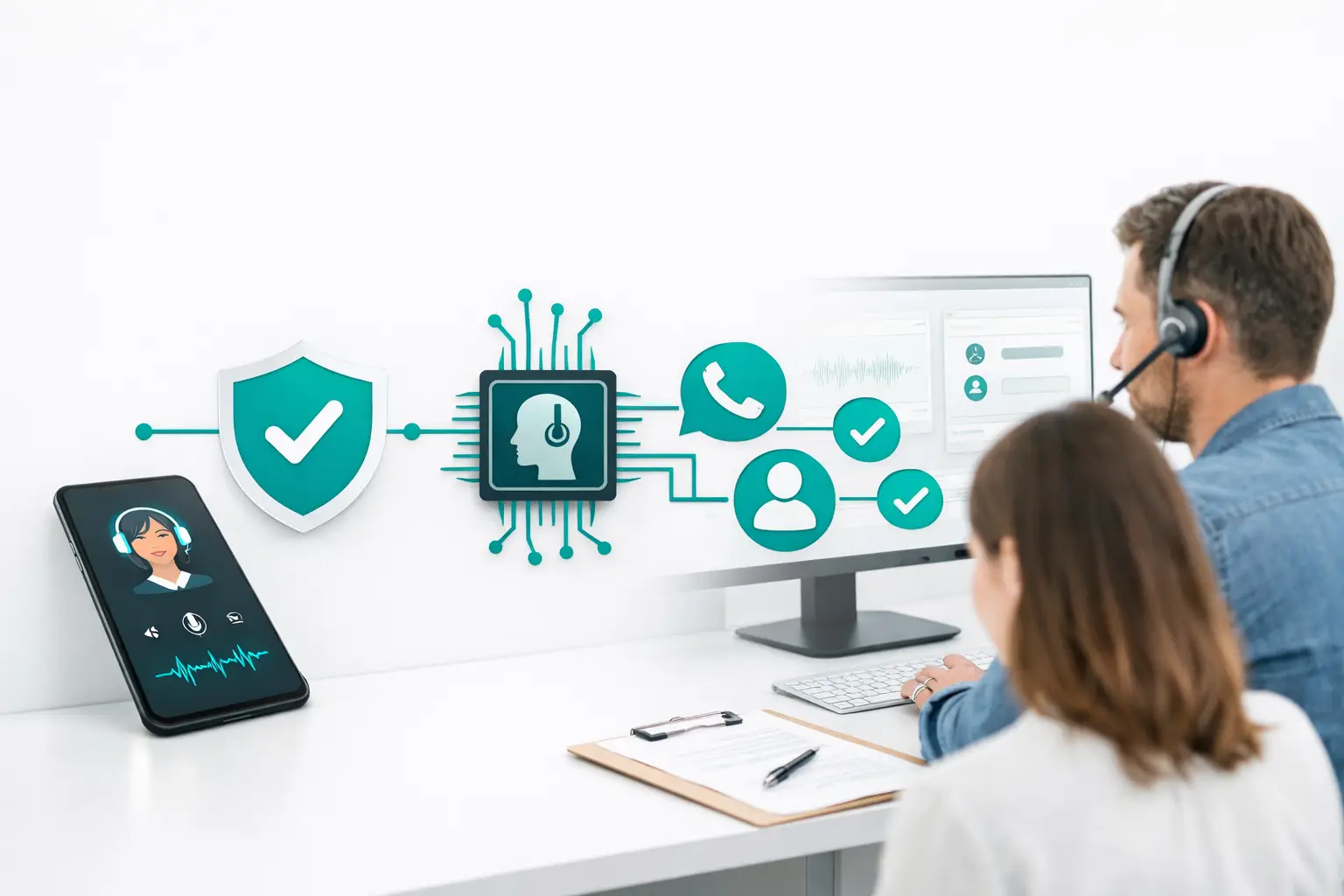
An AI agent can qualify a lead in 90 seconds, transfer a ready-to-buy caller to a closer, and log every outcome in the CRM. It can also create immediate exposure if the campaign launches without the right consent record, recording notice, or state-level control. US AI call consent rules are not a setting inside a dialer. They are an operating requirement that must survive across lead sources, carriers, AI providers, routing logic, and reporting.
For production teams, the question is not whether an AI voice agent sounds human. The question is whether every call type has a defensible policy, a verifiable permission trail, and a system that prevents the wrong call from being placed.
What US AI Call Consent Rules Mean in Practice
Consent requirements depend on several facts at once: why the call is being made, the type of number reached, the technology and voice used, where the recipient is located, what disclosures occur, and whether the call is recorded. Federal rules establish a baseline, while state telemarketing, privacy, recording, and automated-call laws can add tighter requirements.
For marketing calls using an artificial or prerecorded voice, prior express written consent is generally the standard teams need to plan around. The FCC has also made clear that AI-generated voices fall within the TCPA's artificial or prerecorded voice restrictions. That means swapping a recorded message for a real-time AI conversation does not remove consent obligations.
This distinction matters for operators who assume a live conversational model changes the compliance analysis. It may change call handling, but it does not eliminate the need to classify the campaign correctly before traffic starts.
Consent is also not one universal checkbox. A permission record collected for a requested service update may not support a separate marketing campaign. A consent record connected to one brand may not automatically extend to another company, partner, or seller. The exact scope, language, timing, source, and recordkeeping requirements should be reviewed with qualified legal counsel.
Build Consent Into the Call Workflow, Not a Spreadsheet
The weak model is familiar: lead data enters through forms, CRM imports, partner feeds, and appointment tools; someone exports a list; a dialer starts calling; compliance is reconstructed after a complaint. That model breaks as soon as volume increases or vendors change.
A production-grade workflow treats consent as a first-class data object. Each callable contact should carry the fields that determine whether a campaign can proceed: source, capture date and time, consent language version, purpose of consent, phone number, jurisdiction where relevant, and any opt-out or suppression status. If the system cannot answer why a number was eligible for a particular campaign, it should not place the call.
That record needs to travel with the contact. When a form platform pushes leads to HubSpot or Salesforce, when a lead provider sends a batch, or when a campaign tool hands a record to an AI agent, the permission metadata cannot be stripped out along the way.
This is where fragmented stacks create risk. An AI provider may handle the conversation. A carrier handles delivery. The CRM stores the lead. A separate platform manages campaign logic. If each system holds a partial version of the record, no one can reliably determine whether the next call is permitted.
Separate transactional, service, and marketing traffic
Do not run every outbound call through one campaign template. A customer-requested callback, an appointment reminder, a service follow-up, and a marketing outreach campaign have different purposes and can carry different consent requirements.
Create distinct campaign classes and force users to select one before launch. Then attach the correct eligibility rules, approved scripts, disclosure requirements, calling windows, routing behavior, and retention policy to that class. This reduces accidental misuse of a consent record obtained for a narrower purpose.
For example, a solar operator may route an inbound web lead to an AI qualification flow after the lead submits a form with appropriate permission. That does not mean an older homeowner list can be added to the same workflow. The record source and applicable consent must be evaluated independently.
Treat opt-outs and suppression as real-time controls
An opt-out cannot be a note that waits for a weekly CRM cleanup. It must immediately block the next call and propagate across every active system, including carrier tools, campaign queues, CRM automations, and related messaging channels where applicable.
The operational test is simple: if a recipient asks not to be contacted during an AI call, can the platform stop future outreach before the next campaign job runs? If the answer depends on a manual export, the control is not ready for scale.
Recording Consent Is a Separate Decision
Teams often focus on permission to place a call and overlook permission to record it. Those are separate questions. Recording rules vary by state, and some jurisdictions require consent from all parties to a recorded conversation. A call can be permissible to make but still create risk if it is recorded without the required notice or consent.
Decide at the campaign level whether recording is necessary. For quality assurance, dispute resolution, training, and AI performance review, recordings can be valuable. They also increase data governance responsibilities. If recording is enabled, configure an approved notice at the appropriate point in the call flow, capture the response where required, and define what happens if consent is withheld.
Do not use one generic recording prompt without considering routing. A call that transfers from an AI receptionist to a human team, or crosses into a different queue, needs a consistent policy. The recording state should be visible to the receiving agent and preserved in the call record.
Disclosure Should Match the Actual Experience
If callers are speaking with an AI agent, teams should not design scripts that create confusion about who or what is on the line. Clear disclosure protects the recipient experience and gives the operation a consistent standard for QA.
The right wording and timing depend on the call purpose, applicable law, and counsel's guidance. Operationally, the system should support approved disclosure blocks that cannot be casually edited by campaign managers. Version those blocks, log which version ran on each call, and review them whenever a new state, vertical, or use case is added.
This matters most when workflows change mid-call. An AI agent may begin as an inbound receptionist, qualify intent, schedule an appointment, then hand the caller to a human. The transcript, disposition, disclosure state, and recording status should follow that handoff. Otherwise, the human team starts blind and the audit trail fractures.
State Rules Make Location Data Operationally Important
Federal standards are not the entire decision tree. States may impose separate limits related to telemarketing, automated calls, caller disclosures, calling hours, recording, or consumer privacy. Requirements can change, and the relevant jurisdiction may be driven by the called party's location, not the office location of the business placing the call.
That makes clean location data more than a segmentation preference. Campaign logic may need to suppress certain contacts, apply a different call window, select a jurisdiction-specific notice, or route a campaign for review before launch.
Avoid building this as a static spreadsheet maintained by one operations manager. Use policy-driven controls that can be updated centrally and applied consistently. When legal guidance changes, the business should be able to modify an eligibility rule once rather than rebuild workflows across the CRM, dialer, AI provider, and carrier console.
Vendor Architecture Determines Whether You Can Prove Compliance
An AI voice stack has multiple points of failure: the lead source, consent-capture form, CRM, orchestration layer, agent provider, dialing platform, carrier, recording system, and analytics warehouse. A compliant policy on paper is not enough if those systems cannot exchange status reliably.
Teams need an auditable event trail for every call: the source record, permission basis, campaign selected, attempted time, number used, AI agent version, disclosure event, recording state, transfer outcome, opt-out event, and final disposition. The point is not to create paperwork. It is to give revenue operations and compliance owners a shared record of what happened.
This architecture also improves performance. When consent and contactability data are visible in the same operating layer as campaign outcomes, teams can separate a weak script from a bad lead source, poor number health, or an overly broad audience. Compliance controls become part of better routing and better reporting, not a brake on growth.
VoiceUni is built around that operational reality: the AI agent, carrier, CRM, lead source, campaign logic, and human handoff cannot operate as disconnected tools when real revenue and real regulatory obligations are involved.
A Pre-Launch Standard for AI Call Campaigns
Before activating a new AI calling workflow, assign a named owner for the campaign and confirm the call purpose, eligible audience, consent standard, disclosure language, recording policy, state controls, suppression logic, and escalation path. Test the full journey with real system events, not just a demo call.
Then test failure cases. What happens when consent metadata is missing? When a contact opts out during a transfer? When a carrier route fails and traffic moves to a backup provider? When the CRM sync is delayed? Production readiness means the system fails safely rather than placing a call based on incomplete data.
The best AI calling operations do not treat consent as legal fine print added after deployment. They make it a routing signal, a campaign gate, and a permanent part of the customer record. That approach gives teams room to move quickly because the infrastructure knows when not to call.
More from the VoiceUni Blog.

What Drives Solar Appointment Booking Results
A solar operator booking 150-plus appointments in a single week is not winning because it found a magic script. It is winning because its lead response, qualification, routing, follow-up, and reporting are operating as one system. Solar appointment booking results are usually decided in the handoffs between those st...

AI Phone Number Reputation Guide for Call Teams
A campaign can have clean data, a capable AI voice agent, and a well-built follow-up sequence, yet still underperform for one basic reason: the originating phone number has lost trust. This AI phone number reputation guide is for operators who need to protect answer rates before poor number health turns into a pipel...

AI Contact Center Software Review for Operators
An AI contact center software review should start where most evaluations fail: the live workflow, not the demo. A voice agent that can hold a convincing conversation is only one component. Revenue operations still need the right lead data, approved contact rules, routing logic, carrier capacity, CRM updates, human e...
Get new posts by email.
One email a month, no spam, unsubscribe anytime.