
Voice Agent Infrastructure That Holds Up
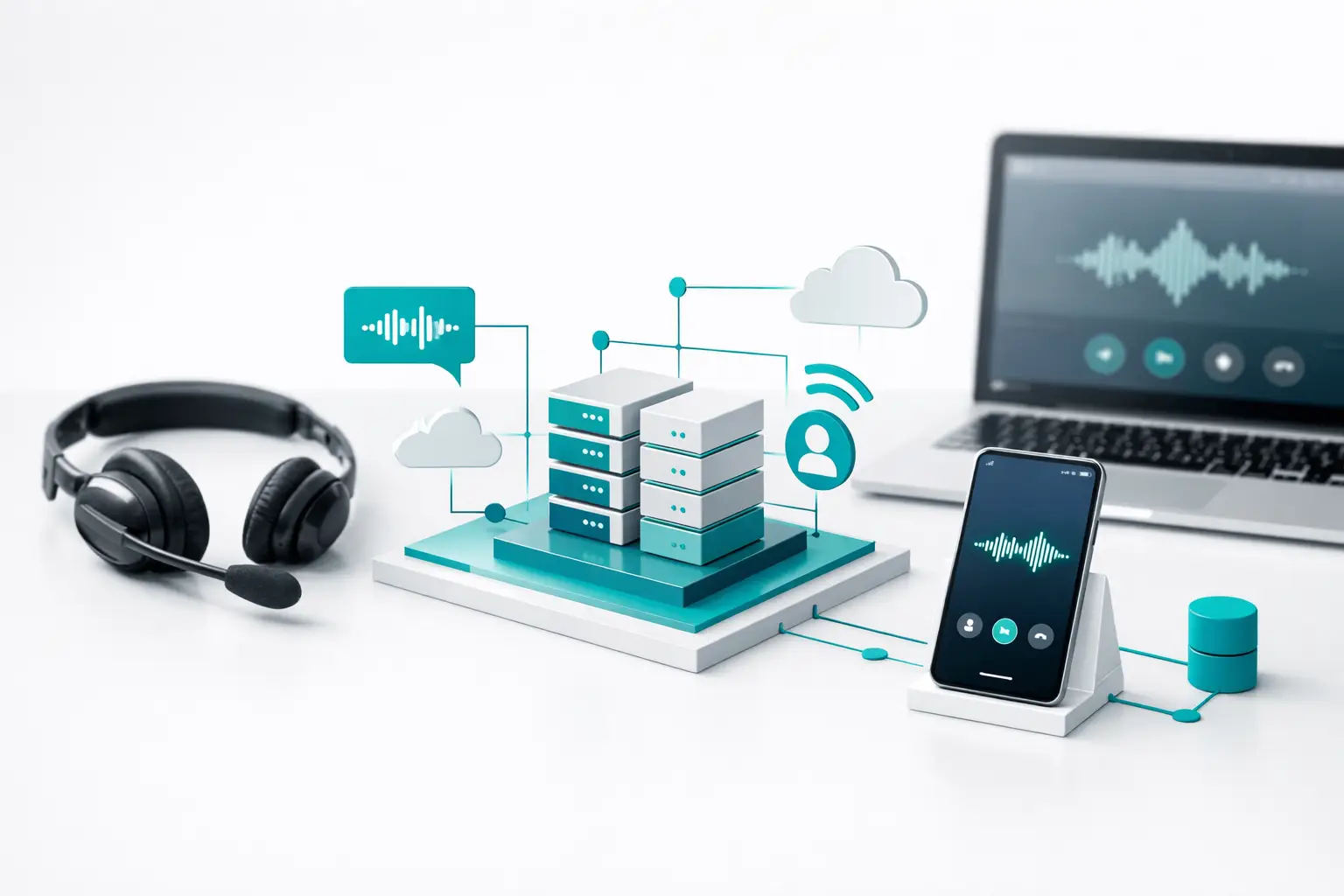
A voice agent can sound convincing in a demo and still fail the first real operating day. A lead arrives from a form, the CRM record is incomplete, the caller needs a live transfer, the preferred carrier has an issue, and no one can explain the outcome in reporting. Voice agent infrastructure is what determines whether that interaction becomes a booked appointment, a useful follow-up task, or another untraceable call.
For revenue teams that depend on phone conversations, the AI model is only one part of the system. Production performance depends on how the agent connects to carriers, phone numbers, lead sources, routing logic, CRM records, compliance workflows, and human teams. Without that operating layer, every new campaign becomes an integration project and every exception becomes a manual fix.
What Voice Agent Infrastructure Actually Includes
Voice agent infrastructure is the operational layer around an AI voice agent. It connects the conversational engine to the systems required to run inbound and outbound calling as a repeatable business function.
The AI provider handles the conversation. The infrastructure handles what happens before, during, and after it. That includes receiving or placing calls through the right carrier, selecting a healthy number, pulling context from the CRM, applying campaign rules, routing qualified callers, triggering follow-up across other channels, and recording the result where the business can use it.
This distinction matters because a voice agent is not a contact center. It does not automatically provide lead allocation, campaign pacing, call disposition standards, failover, reporting, or escalation rules. Those capabilities are what allow an operator to move from a few test calls to thousands of managed conversations.
For a solar team, that may mean routing a homeowner to the correct setter based on geography and qualification. For an insurance agency, it may mean following up after a missed call by text and email while preserving the complete conversation history. For a real estate operator, it may mean recognizing an existing lead, updating the CRM, and assigning the next task without asking a coordinator to clean up the record.
The Failure Point Is Usually Between Systems
Most teams do not struggle because their AI agent cannot speak. They struggle because the systems around it were connected with one-off automations, custom webhooks, and vendor-specific workarounds.
A common stack has an AI provider such as Vapi or Retell, a telephony provider, a CRM such as HubSpot or Salesforce, lead data, calendar tools, and messaging tools. Each system may work independently. The gaps show up when data moves between them.
A campaign may call records that were already worked. A transfer may fail because the receiving team is not available. A call may be marked as completed in one tool but never create the follow-up task in another. Carrier quality may change without a clear way to move traffic. Reporting may show call volume but not appointments, transfers, contact rates, or outcomes by campaign.
These are operating problems, not feature gaps. Adding another point solution usually adds another handoff to maintain.
Why custom integration work becomes expensive
Custom engineering can be appropriate when a business has unusual workflows or proprietary systems. But it is a poor default for ordinary calling operations. Every API change, carrier issue, field mapping update, or new campaign requirement creates work for technical staff who should not be needed to launch a follow-up sequence.
The hidden cost is speed. If campaign managers must wait for developers to change routing, update a disposition, or add a CRM action, experimentation slows down. The business loses the advantage AI was supposed to provide.
A production platform should make core operational changes configurable. Teams need to adjust campaign logic, handoff rules, agent assignment, and follow-up paths without rebuilding the plumbing every time.
Build Around the Call Lifecycle
The right architecture follows the full lifecycle of a conversation rather than treating the call as an isolated event.
Before the call, the system needs to identify the contact, validate available context, apply campaign eligibility rules, select the channel and number, and prepare the agent with the information it needs. Data should remain connected to the source CRM rather than living in a disconnected campaign spreadsheet.
During the call, the infrastructure needs to manage routing, carrier delivery, number health, agent availability, transfers, and escalation. A receptionist workflow, for example, may route a new prospect differently from an existing customer or a vendor. A qualified lead may need an immediate warm handoff. A support issue may require a callback task if no specialist is available.
After the call, the system needs to persist the transcript and outcome, update the CRM, trigger the correct next action, and make performance visible. A positive conversation that does not create a scheduled appointment or task is not an operational win. It is an incomplete workflow.
This is also where omnichannel coordination matters. Voice is often the highest-intent interaction, but it rarely stands alone. A missed call may require a timely SMS. A no-answer attempt may fit into a consent-based email sequence. A webchat conversation may provide context for a later call. When each channel has separate data and rules, customers receive fragmented follow-up and operators lose the thread.
Reliability Is a Revenue Requirement
Calling teams notice infrastructure only when it breaks. A carrier outage, deteriorating number performance, transfer failure, or CRM sync delay can directly affect contact rates and booked revenue.
That is why production voice operations need carrier management with failover options, active phone number health monitoring, and clear visibility into call outcomes. A single provider may be sufficient for a small, stable workflow. It becomes a risk when a business is running multiple campaigns, regions, or high-value inbound traffic.
Reliability also means protecting the handoff between AI and people. An AI agent should not become a dead end when the conversation requires human judgment. Define who receives the transfer, when the transfer occurs, what context is passed along, and what happens when the destination is unavailable. Those details separate a useful front line from an automated maze.
There is a trade-off here. More routing options and fallback paths improve resilience, but they can create complexity if rules are not standardized. Start with the exceptions that have the highest revenue or service impact: missed inbound calls, qualified transfers, existing-customer routing, and carrier fallback.
Reporting Must Connect Activity to Outcomes
Call counts are not a performance system. Serious operators need to see what happened by campaign, channel, lead source, agent, disposition, and business outcome.
A marketing agency may care about speed to first contact and appointments set by client account. A home services team may need to compare qualification rates by territory and campaign. An insurance operation may focus on whether follow-up attempts become live conversations and completed applications. The reporting model should reflect those decisions, not just telephony metrics.
The key is a consistent data model. If one system calls an outcome “booked,” another calls it “qualified,” and the CRM never receives either field, the dashboard cannot be trusted. Establish shared definitions for contact, qualified conversation, transfer, appointment, follow-up, and conversion before scaling volume.
This is one reason an orchestration layer is valuable. It can centralize campaign activity across voice, SMS, email, webchat, WhatsApp, Telegram, and social DMs while keeping the CRM as the business system of record. Teams gain a unified operating view without forcing a full rip-and-replace of their existing stack.
A Practical Standard for Selecting Infrastructure
Evaluate voice agent infrastructure based on the workflows it can run, not on how many integrations appear on a logo wall. Ask whether it supports your existing AI provider, carrier, numbers, CRM, and lead sources. A BYO-everything model matters when you have already invested in a stack that works and do not want to be trapped by a closed platform.
Then test the operational edge cases. Can the platform route inbound calls by intent? Can it handle progressive or predictive dialing where appropriate to the workflow? Can it coordinate multi-touch sequences, update the CRM in real time, manage human handoffs, and show results by campaign? Can your team change those rules without opening an engineering ticket?
Finally, inspect how quickly a real workflow can be deployed. The goal is not a polished proof of concept. The goal is a live system with routing, follow-up, reporting, and accountability in place. VoiceUni is built for that role: the connective layer between AI voice providers, telephony, CRMs, data sources, and the channels where conversations continue.
The strongest voice agent programs do not win because they have the flashiest demo. They win because every call has a defined path, every outcome reaches the right system, and every team can see what needs to happen next.
More from the VoiceUni Blog.

What Drives Solar Appointment Booking Results
A solar operator booking 150-plus appointments in a single week is not winning because it found a magic script. It is winning because its lead response, qualification, routing, follow-up, and reporting are operating as one system. Solar appointment booking results are usually decided in the handoffs between those st...

AI Phone Number Reputation Guide for Call Teams
A campaign can have clean data, a capable AI voice agent, and a well-built follow-up sequence, yet still underperform for one basic reason: the originating phone number has lost trust. This AI phone number reputation guide is for operators who need to protect answer rates before poor number health turns into a pipel...

AI Contact Center Software Review for Operators
An AI contact center software review should start where most evaluations fail: the live workflow, not the demo. A voice agent that can hold a convincing conversation is only one component. Revenue operations still need the right lead data, approved contact rules, routing logic, carrier capacity, CRM updates, human e...
Get new posts by email.
One email a month, no spam, unsubscribe anytime.