
How to Automate Inbound Qualification at Scale
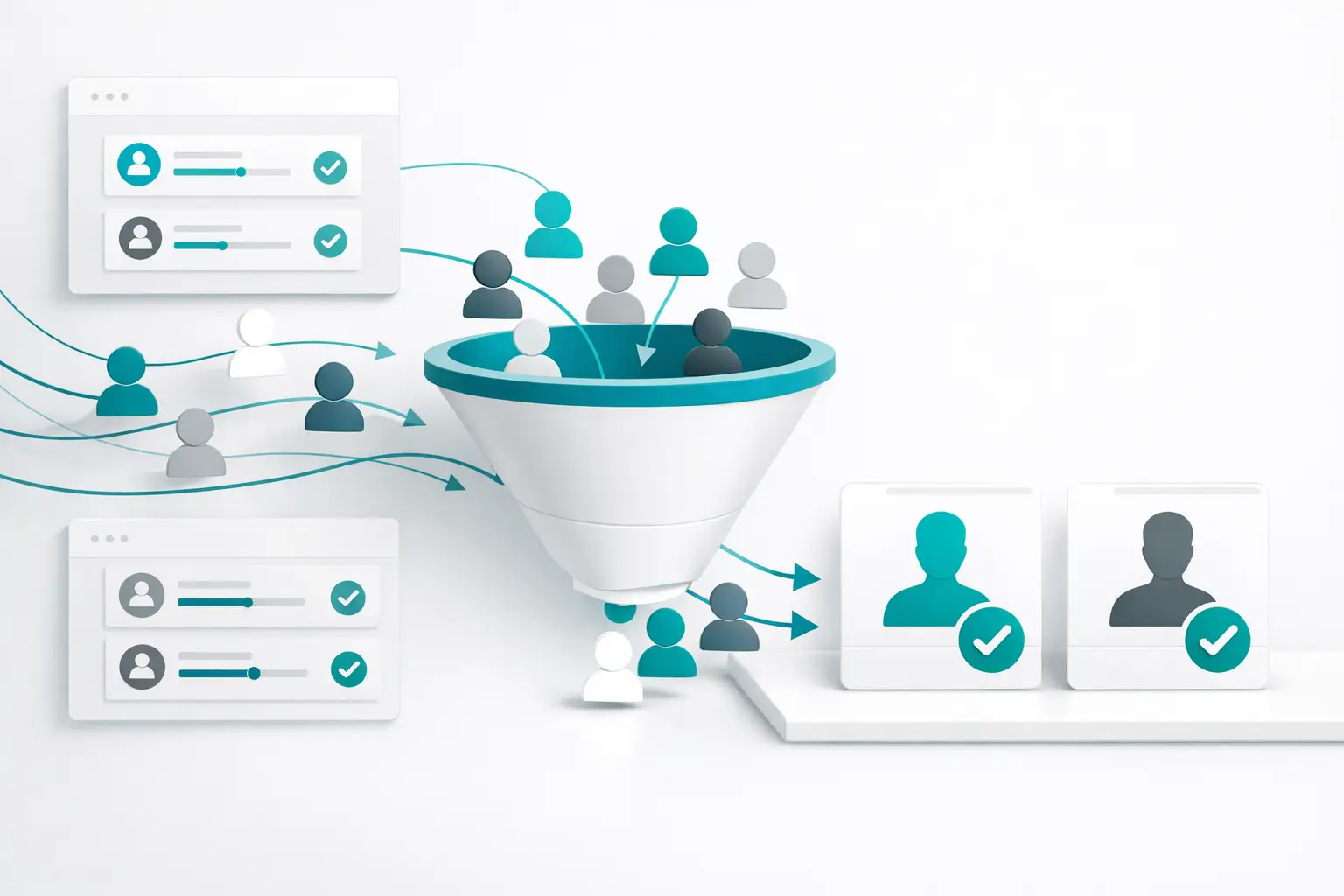
An inbound lead who waits 20 minutes for a reply is not a qualified prospect for long. They are comparing providers, filling out another form, or calling the next business on the list. The question is not whether to automate inbound qualification. It is how to automate inbound qualification without creating dead-end conversations, bad CRM data, or a routing system your team cannot trust.
For phone-driven businesses, qualification has to happen at the speed of intent. A solar prospect may need to confirm property ownership and utility usage. An insurance caller may need to identify the policy type, state, and renewal timeline. A home services lead may need to establish service area, issue urgency, and appointment availability. The workflow changes by vertical, but the operating model does not: capture intent, validate fit, route correctly, and preserve context.
Start With a Qualification Definition, Not an AI Script
Automation fails when teams treat qualification as a list of questions rather than a business decision. Before configuring an AI voice agent, chat flow, or form, define what makes an inquiry actionable.
Most revenue teams need three outcomes. The first is a qualified opportunity that should be booked, transferred, or assigned immediately. The second is a viable but not ready lead that belongs in a structured follow-up sequence. The third is an inquiry that is outside your service area, product fit, or current capacity and should be closed out cleanly.
Build the definition around fields that change the next action. For a mortgage team, credit range may matter only if it determines which loan specialist receives the lead. For a roofing operator, storm damage, property type, and zip code may determine whether the caller gets an emergency dispatch or a standard estimate slot. Do not collect data because it is available. Collect it because a routing rule, sales motion, or reporting decision depends on it.
Separate hard gates from conversational signals
Hard gates are factual conditions: location, service type, budget threshold, existing customer status, or consent status where applicable. They can drive deterministic routing.
Conversational signals are less exact: urgency, buying timeline, homeowner concerns, or whether a prospect is evaluating multiple options. These should influence lead scoring and follow-up priority, not automatically disqualify someone based on a rigid script.
This distinction matters because real conversations are messy. A caller may not know their exact budget, may describe their issue indirectly, or may need help understanding the available options. An AI agent should clarify and guide, while the workflow should reserve irreversible decisions for data you can actually defend.
Connect Every Inbound Channel to One Qualification Record
Inbound qualification breaks down when calls, texts, web chats, forms, emails, and social messages create separate records. A prospect who starts in web chat and calls five minutes later should not have to repeat the same details. Your team should not have to search three systems to learn what happened.
Use a single lead or contact record as the source of operational truth. When an inquiry arrives, the system should identify the person where possible, create or update the CRM record, attach the channel source, and retain every qualification response as structured data. Conversation transcripts and recordings provide context, but they are not a substitute for normalized fields.
For example, an inbound call can capture service type, zip code, timeline, and requested appointment window. The automation writes those values to the CRM, scores the lead, checks the assigned territory, and triggers the correct next step. If the caller hangs up before finishing, the same record can enter an approved follow-up workflow through the channel they used or selected.
The infrastructure layer is the difference between a helpful AI conversation and an operating system. VoiceUni is designed to connect AI voice providers, telephony, CRM, lead sources, and follow-up channels so qualification logic does not live in a pile of brittle point-to-point integrations.
Design the Inbound Qualification Workflow
A reliable workflow is not complicated, but each step needs a clear owner. The AI agent owns the conversation. The orchestration layer owns data movement, routing, and fallback behavior. Your CRM owns the customer record and sales accountability. A human owns exceptions and high-value conversations.
1. Respond and identify intent immediately
For inbound calls, the AI receptionist or voice agent should answer with a clear disclosure and a direct opening question. For forms, chat, and social messages, the first response should confirm what the person needs and gather enough information to classify the inquiry.
Avoid sending every inbound lead through the same long questionnaire. If someone calls about a rescheduled installation, they need customer support routing, not a new-sales qualification flow. Intent recognition should determine which branch opens next.
2. Enrich the conversation with known data
If the caller is already in the CRM, use the information you have. Reference their open estimate, prior appointment, assigned representative, or last conversation when appropriate. This reduces friction and gives the AI agent a practical role beyond collecting basics.
For new leads, enrich only with data sources your business is authorized to use. The goal is not to overwhelm the agent with background data. It is to make better routing decisions and reduce repetitive questions.
3. Score and route using explicit rules
A qualification score should map to an operational action. High-intent leads may receive a live transfer during business hours, an instant calendar booking option, or a priority queue. Medium-fit leads may be assigned to a rep with a timed task and multi-touch follow-up. Low-fit or out-of-area inquiries can receive a courteous resolution without consuming sales capacity.
Set routing rules based on real constraints: territory, language, product line, rep availability, operating hours, and lead value. Then define failover. If the primary rep does not answer, where does the conversation go? If an AI provider, carrier route, or CRM API fails, what is the backup path? A qualification workflow is only as good as its behavior during normal operational failure.
4. Hand off with context, not just a notification
The worst handoff is a message that says, “New lead assigned.” The best handoff gives the receiving rep the reason for the transfer, captured answers, source channel, urgency, and recommended next action.
For a live transfer, pass a concise summary before the human joins: the prospect’s need, qualifying details, and any unanswered question. For an appointment, attach the transcript and structured fields to the CRM event. This lets the rep begin with, “I see you are looking for a quote for a two-story home in Austin and want installation this month,” instead of restarting discovery.
Use Follow-Up Automation for Incomplete Qualification
Not every inbound conversation ends with a booking. Callers disconnect. Forms are abandoned. Prospects answer one question in chat and disappear. Treat these as incomplete workflows, not lost records.
The follow-up sequence should reflect what is known. A person who requested pricing but did not complete location details needs a short, specific prompt. A qualified lead who missed a transfer needs a fast callback task or an approved message that references their request. A customer support inquiry should not accidentally enter a sales nurture campaign because the system failed to classify intent.
Timing matters, but relevance matters more. Build sequences around the qualification gap: confirm eligibility, choose a service, schedule a consultation, upload required information, or reconnect with a specialist. Stop the sequence the moment the lead completes the action or reaches a human. Nothing damages trust faster than an automated reminder after the appointment has already been booked.
Measure Qualification Quality, Not Just Lead Volume
Inbound automation can make a dashboard look busy while quietly lowering sales quality. Track the conversion path from first inquiry to completed qualification, booked appointment, attended appointment, and revenue outcome.
Review transfer rate alongside transfer acceptance. Measure booking rate alongside show rate. Track how often AI-captured fields are corrected by reps, because this exposes unclear prompts or flawed data mapping. Monitor abandonment by step and channel to identify where the flow becomes too demanding.
Operational reporting should also show exceptions: failed CRM writes, unanswered transfers, duplicate records, carrier failures, and conversations that hit a fallback route. These are not minor technical details. They are revenue leakage.
Build for the Next Conversation, Not the Demo
The right inbound qualification system does not try to remove people from every conversation. It removes the delay, repetition, and manual handoffs that keep qualified prospects from reaching the right person.
Start with one high-volume inbound use case, make the routing and CRM writeback reliable, and inspect the conversations weekly. Once the operating logic holds under real call volume, expand it across channels and teams. That is how qualification becomes a repeatable revenue process rather than another automation that works only when someone is watching it.
More from the VoiceUni Blog.

What Drives Solar Appointment Booking Results
A solar operator booking 150-plus appointments in a single week is not winning because it found a magic script. It is winning because its lead response, qualification, routing, follow-up, and reporting are operating as one system. Solar appointment booking results are usually decided in the handoffs between those st...

AI Phone Number Reputation Guide for Call Teams
A campaign can have clean data, a capable AI voice agent, and a well-built follow-up sequence, yet still underperform for one basic reason: the originating phone number has lost trust. This AI phone number reputation guide is for operators who need to protect answer rates before poor number health turns into a pipel...

AI Contact Center Software Review for Operators
An AI contact center software review should start where most evaluations fail: the live workflow, not the demo. A voice agent that can hold a convincing conversation is only one component. Revenue operations still need the right lead data, approved contact rules, routing logic, carrier capacity, CRM updates, human e...
Get new posts by email.
One email a month, no spam, unsubscribe anytime.