
Lead Data Provider Integration That Holds Up
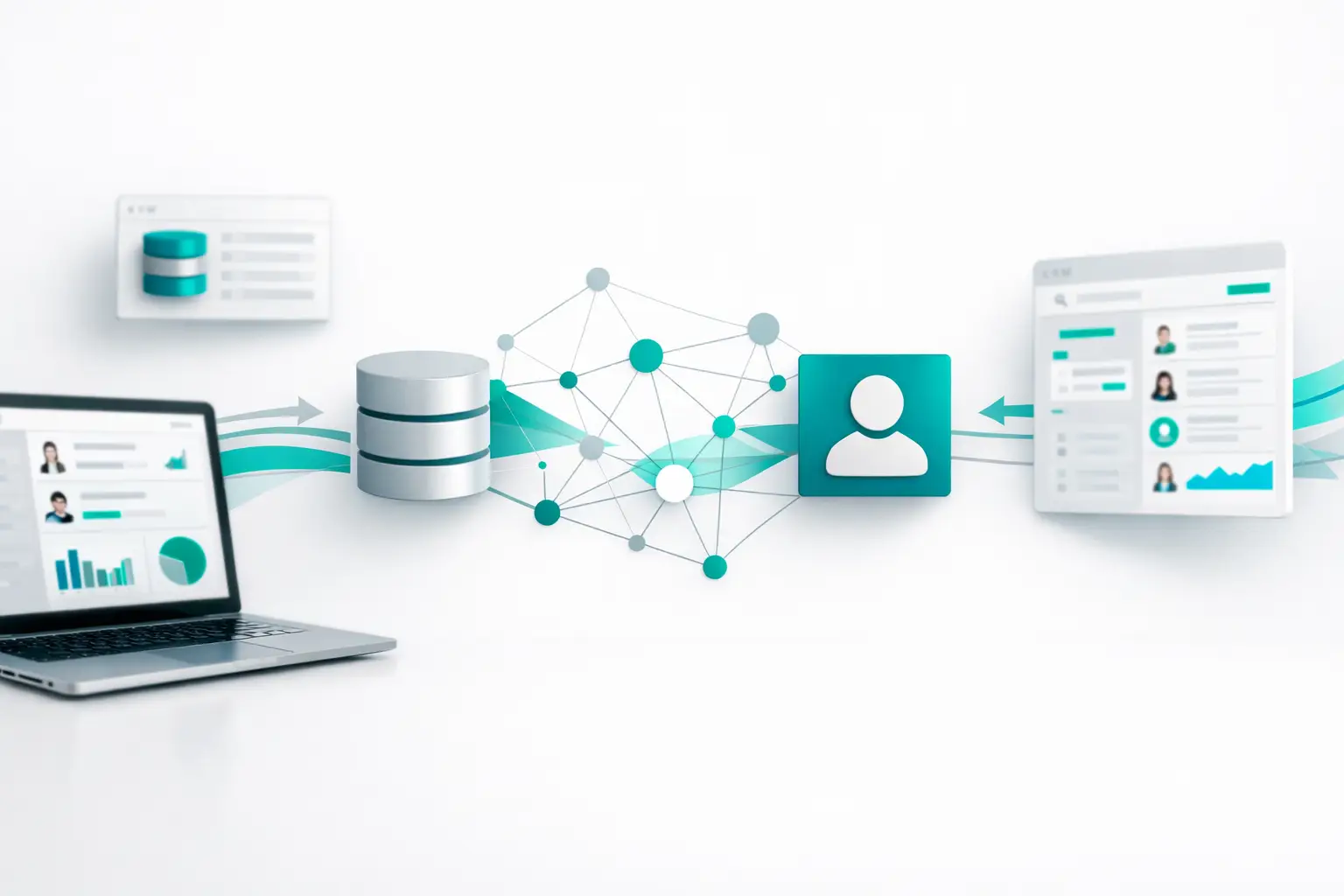
Bad lead data does not usually fail all at once. It fails in small, expensive ways. A record arrives without timezone data, your AI voice agent calls at the wrong hour, the CRM status never updates, the rep follows up twice, and reporting shows activity without showing outcome. That is the real problem with lead data provider integration. It is not about getting records from one system to another. It is about making lead data operational across calling, messaging, routing, and reporting.
For teams running revenue through phone conversations, that distinction matters. A home services operator buying leads from multiple vendors, an insurance agency enriching records before outbound follow-up, or a mortgage team routing inbound inquiries to licensed reps all need the same thing: data that arrives usable, governed, and tied to action. If the integration stops at field mapping, the operation still breaks downstream.
What lead data provider integration actually needs to do
Most teams start with the obvious use case. They want Apollo, ZoomInfo, a form source, or a vertical lead vendor to push contacts into a CRM or dialer. That is necessary, but it is not enough. The integration has to preserve the logic around the record, not just the record itself.
That means source attribution needs to survive every handoff. Consent status has to remain attached to the lead. Routing rules need to read the right fields in real time. Duplicates must be managed before they hit campaigns. If your AI voice stack, carrier setup, CRM, and email tool all interpret lead status differently, the same lead can trigger the wrong workflow in three places at once.
This is why duct-tape integrations create hidden operating costs. A webhook may technically work, but if it cannot support retries, field normalization, suppression logic, channel sequencing, and reporting consistency, your team ends up doing manual cleanup around it. The integration becomes another system to manage instead of infrastructure you can trust.
The operational risks behind a weak lead data provider integration
A weak integration usually shows up first in speed-to-lead. Records land late, enrichment jobs stall, or campaign assignment lags behind. For high-intent inbound demand, even a few minutes can change conversion rates. But speed is only one part of the problem.
The bigger issue is state management. A lead gets marked as qualified in one system, contacted in another, and still appears as new in a third. That creates duplicate outreach, bad rep experiences, and reporting that cannot answer basic questions about lead source performance.
There is also a routing problem. Lead providers rarely structure data exactly the way your operation needs it. One vendor sends state as a full name, another as a two-letter code. One includes campaign IDs, another only source tags. One gives a mobile number in clean E.164 format, another sends whatever the user typed. If that data feeds directly into voice and messaging workflows without standardization, assignment logic becomes unreliable.
Then there is channel coordination. A lot of teams now run voice, SMS, email, and manual follow-up together. If the lead data provider integration only feeds one channel, your operation loses sequence control. The voice agent may attempt contact while an email nurture flow is already active, or a live rep may call a lead that should have been routed into an automated qualification step first.
Good integration design starts with lead readiness
The best approach is to treat incoming lead data as raw material, not finished inventory. Before any record hits a live campaign, it should pass through a readiness layer that verifies formatting, maps fields, checks routing eligibility, and assigns next actions.
In practice, that means normalizing names, phone numbers, timestamps, source identifiers, and lifecycle stages. It also means resolving duplicates with clear logic. Sometimes the newest lead should overwrite the oldest. Sometimes the existing CRM owner should be preserved. Sometimes a provider-specific field should be stored for reporting but never exposed to the agent workflow. These are not edge cases. They are normal operational requirements.
A good readiness layer also gives you control over exceptions. Not every bad record should enter the same fallback path. A missing last name may be acceptable. A missing phone number is not. An invalid ZIP code may block territory routing. A mismatched state license rule may require reassignment. Strong systems handle these cases intentionally instead of quietly failing in the background.
How to evaluate a lead data provider integration
If you are evaluating your current stack or planning a new implementation, the key question is simple: does the integration support operations, or does it just move data?
Start with ingestion. Can the system accept leads from multiple providers and standardize them into one operational schema? If each source requires its own custom workflow forever, maintenance will expand with every new campaign.
Next, look at orchestration. Can the same lead trigger different paths based on source, intent, geography, campaign, or capacity? That is especially important when AI voice agents are part of the flow. The lead should not just appear in a list. It should be routed into the right conversation path, with the right prompt context, at the right time.
Then look at sync integrity. CRM updates, disposition changes, human handoffs, and booked outcomes all need to write back consistently. Otherwise, the lead provider gets credit for volume, but your team loses visibility into revenue contribution.
Finally, look at failure handling. Every integration fails sometimes. APIs rate limit. Providers send malformed records. Carrier or agent systems go down. The difference between a workable setup and a fragile one is what happens next. Can records retry automatically? Are failures logged with enough detail to fix them quickly? Can leads queue safely until downstream systems recover?
Where teams usually overbuild and underbuild
Some teams overbuild by trying to create a perfect universal data model before launching anything. That delays deployment and burns resources on edge cases that may never matter. Others underbuild by wiring a lead source directly into a dialer and assuming the CRM can be cleaned up later. That is faster on day one and more expensive by week three.
The better pattern is staged maturity. First, get a common schema in place for the fields that actually drive action: contact data, source, consent status, timezone, routing attributes, owner assignment, and campaign metadata. Then add enrichment, advanced suppression, score-based prioritization, and multi-channel branching as the operation matures.
This is where an infrastructure layer matters. Instead of rebuilding logic across your CRM, voice provider, telephony stack, and agency automation tool, you centralize the workflow rules that determine how lead data becomes action. That is the difference between an integration project and an operating system.
Lead data provider integration for AI voice operations
AI voice changes the stakes because it compresses response time and increases throughput. A team can process far more leads per hour with AI dialing and automated qualification than with manual rep workflows. That is good for pipeline volume, but it also exposes every weakness in your data flow faster.
If the lead data provider integration is unreliable, AI will simply scale the error rate. Wrong timezone data creates more mistimed outreach. Duplicate records produce more repeated contact attempts. Broken CRM sync generates more reporting noise. The upside of AI depends on disciplined orchestration around it.
For operators using tools like Vapi or Retell alongside existing CRMs, carriers, and lead sources, the integration layer has to do more than pass prompts and phone numbers. It has to manage campaign logic, route conversations, maintain lead state across channels, and preserve reporting from first touch through outcome. That is the gap many teams discover after the first proof of concept.
A platform like VoiceUni exists for exactly that layer. Not to replace your data providers, CRM, or AI agent, but to coordinate them so the lead can move from source to conversation to booked result without custom engineering holding the whole thing together.
What good looks like in production
In production, good integration feels boring. Leads arrive on time. Records are standardized before they hit active workflows. AI and human teams work from the same source of truth. Campaigns can be adjusted without rewriting the plumbing. Reporting shows not just who was contacted, but what happened next and which source actually produced revenue.
That does not mean every operation should be designed the same way. A solar campaign buying high-volume leads may prioritize immediate speed, aggressive duplicate controls, and rapid retry logic. A mortgage or insurance team may care more about precise routing, licensing alignment, and detailed disposition sync. It depends on how revenue is generated and where mistakes are most costly.
What does not change is the standard. Lead data provider integration should reduce operational drag, not spread it around the stack. If your team is still reconciling fields by hand, chasing stale records, or guessing which system has the correct lead status, the integration is not done just because the webhook fires.
The right build is the one that turns lead data into accountable action every time, even when volume spikes, vendors change, or one part of the stack has a bad day. That is when integration stops being a technical task and starts becoming a revenue control point.
More from the VoiceUni Blog.
How AI voice agents qualify leads before a human call
A practical guide to using AI voice agents for lead qualification, routing, and cleaner sales handoffs.
What Is AI Voice Orchestration?
A voice agent can sound impressive in a demo and still fail in production. The usual breakdown is not the model. It is the operating layer around it. That is where the question of what is AI voice orchestration starts to matter. Most teams already understand the agent side. They have a provider for speech and conver...
What is omnichannel AI contact center infrastructure?
How operators run voice, SMS, email, and chat on one platform — without wiring every integration by hand.
Get new posts by email.
One email a month, no spam, unsubscribe anytime.