
Salesforce Telephony Orchestration Explained
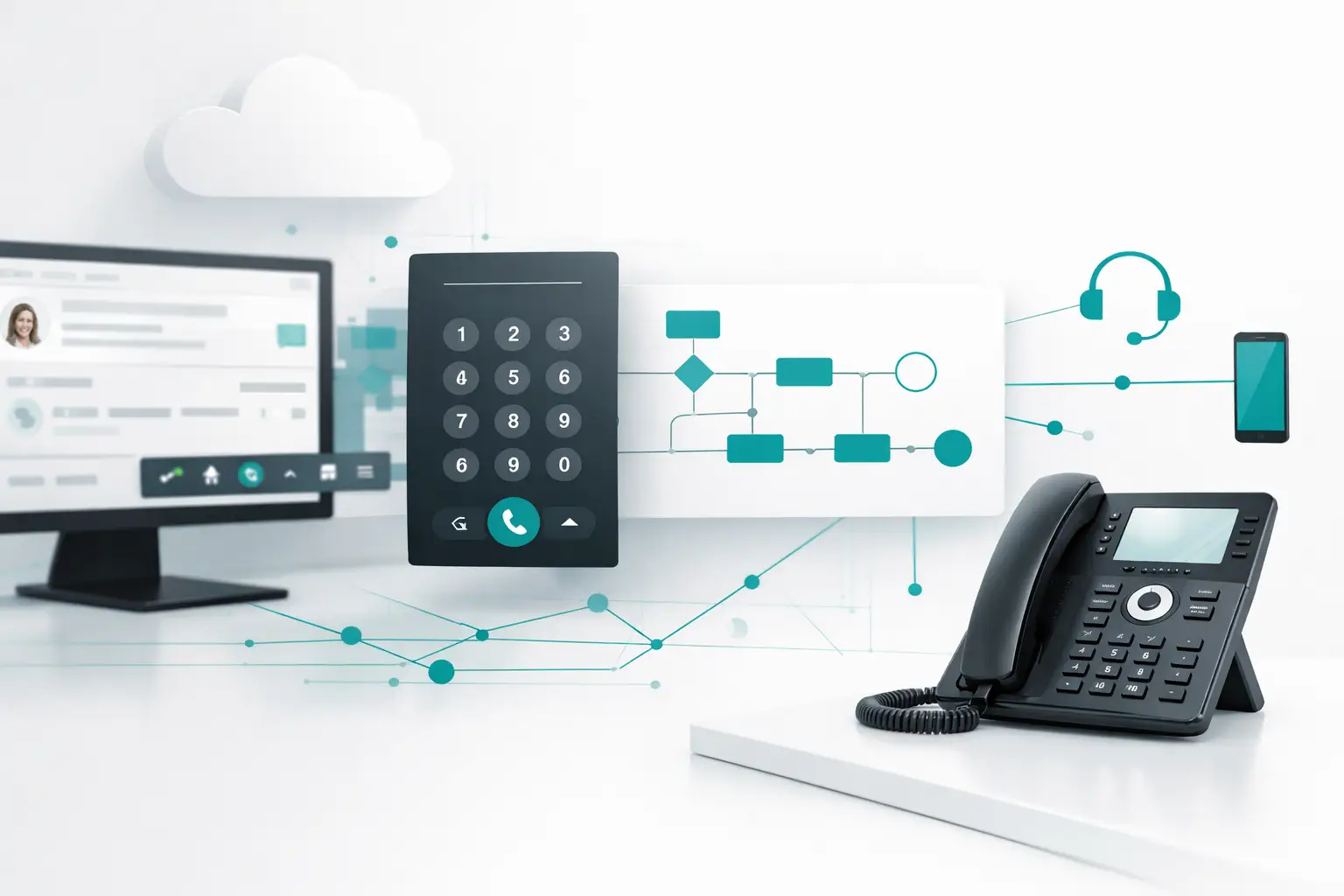
A lead answers on the second ring, the AI agent qualifies them, a human rep takes over when pricing comes up, Salesforce updates the opportunity, and the follow-up sequence starts if the call drops. That is what salesforce telephony orchestration is supposed to handle. In most teams, it does not. Instead, the handoff breaks, call outcomes land in the wrong fields, and reporting lives in three systems that disagree with each other.
For operators running revenue through the phone, this is not a minor integration issue. It is an execution problem. If Salesforce is the system of record but telephony logic lives elsewhere, every workflow depends on whether disconnected tools happen to stay aligned. Sometimes they do. Usually they do until volume increases, routing gets more complex, or AI voice agents enter the stack.
What salesforce telephony orchestration actually means
At a practical level, salesforce telephony orchestration is the coordination layer between your calling infrastructure and your CRM workflows. It decides what should happen before, during, and after a conversation, then keeps those actions consistent across systems.
That sounds simple until you map the real workflow. A new lead might enter from a form, a data provider, or an ad platform. The dialing system needs the right number, the right local presence strategy, the right campaign rules, and the right timing. When the call connects, the AI agent or rep needs context from Salesforce. If the conversation reaches a threshold such as appointment intent or escalation risk, the call may need to transfer to a live team, route by territory, or trigger a supervisor queue. When the interaction ends, Salesforce needs the right disposition, recording reference, transcript metadata, next-step task, and campaign attribution.
Orchestration is the logic that makes those pieces act like one system instead of five loosely connected tools.
Why native CTI is rarely enough
Many teams start with a basic Salesforce CTI setup and assume that is the same thing as orchestration. It is not. CTI can provide screen pops, click-to-call, basic call logging, and agent controls inside Salesforce. Those are useful features, but they do not solve the broader operating model.
The problem shows up when you add modern workflows. AI voice agents need dynamic routing and fallback rules. Outbound campaigns need pacing logic, retry windows, contact state management, and channel coordination beyond voice. Human handoff requires preserving context across systems, not just transferring a call. Reporting needs to reconcile conversation events with pipeline outcomes, not just count calls.
This is where teams hit the ceiling. The CRM knows the account. The dialer knows the call. The AI provider knows the conversation. The carrier knows the delivery path. Nobody owns the end-to-end workflow unless you build or buy an orchestration layer.
The workflows that matter most
The highest-value use cases are rarely about placing a call. They are about controlling what happens around the call.
Inbound routing tied to Salesforce context
When an inbound call arrives, routing should not depend only on IVR menus or static queues. It should consider Salesforce data such as account owner, lifecycle stage, open opportunity, service tier, geography, and prior interaction history. That is the difference between a generic call center and an operation built for revenue and retention.
If the caller is an active opportunity, the workflow might route to the assigned rep first, then fall back to a pooled queue, then to an AI receptionist after hours. If it is an existing customer with an open case, the system may prioritize support and attach the conversation to the right record automatically. If the caller is unknown, the workflow may trigger identity capture, enrichment, and lead creation before the transfer happens.
Outbound sequencing across channels
Most outreach does not succeed on a single call attempt. That makes salesforce telephony orchestration valuable beyond voice alone. If a call goes unanswered, the next action might be an email, an SMS, or a scheduled retry depending on stage, consent status, campaign rules, and territory ownership.
Without orchestration, teams bolt these actions together with separate automations. That creates duplicate touches, poor timing, and bad data hygiene. With orchestration, contact state changes once and the next best action is executed across the full sequence.
AI-to-human handoff
This is where many AI voice deployments fail operationally. The demo works. Production does not. The AI agent can answer questions, qualify intent, and collect structured data, but the moment a human needs to take over, context gets lost.
A proper orchestration layer passes the call, transcript, disposition, extracted entities, and CRM context into the handoff flow. The receiving rep should know what was said, why the transfer happened, and what fields were already updated. If that information arrives late or not at all, the customer repeats themselves and the rep starts from zero.
Reporting that ties conversation activity to revenue
Call counts are not enough. Teams need to know which campaigns produced booked appointments, which queues convert, where transfers fail, and whether AI agents are helping or creating extra touches. Salesforce holds downstream business outcomes. Telephony systems hold interaction events. Orchestration is what lets you join those records cleanly.
Without that layer, reports look complete while hiding the real gaps. A call may be logged, but attached to the wrong lead. A transfer may happen, but not appear in Salesforce as a meaningful workflow event. An appointment may be booked, but never tied back to the originating call path.
Where implementations usually break
Most failures are not caused by missing features. They come from fragmented ownership.
Sales owns Salesforce. Marketing owns lead sources. RevOps owns reporting. IT or an agency manages telephony. The AI provider handles prompts and agent behavior. The carrier handles number delivery. Each system performs its local job, but nobody controls the operational chain.
That creates predictable issues. Field mapping drifts over time. Retry logic conflicts with CRM status rules. Routing is hardcoded around org charts instead of business logic. Carrier failures have no fallback path. New campaigns require engineering work because the stack was never designed as reusable infrastructure.
This is why serious teams start treating telephony as an operating system, not a plugin.
How to evaluate a salesforce telephony orchestration setup
The first question is not whether it integrates with Salesforce. Most tools say they do. The real question is whether Salesforce is part of a controlled workflow or just a destination for call logs.
A strong setup should support dynamic routing based on Salesforce objects and fields, not just static queues. It should maintain contact and conversation state across channels. It should handle AI and human workflows in the same framework. It should fail over cleanly when carriers, numbers, or providers have issues. And it should write back structured outcomes in a way your revenue team can actually report on.
It also needs to be maintainable by operators, not only developers. That matters more than teams expect. A brittle custom build may look flexible at first, but every campaign change, territory update, or AI workflow revision turns into a ticket queue. Over time, speed drops and workarounds multiply.
The trade-off is straightforward. More orchestration power usually means more implementation discipline. You need clear field definitions, routing rules, ownership logic, and reporting standards. If the business has not agreed on those basics, the software cannot fix the ambiguity. But once those pieces are defined, the operational gain is substantial.
Build versus orchestrate
Some teams can build their own coordination layer with Salesforce, a telephony provider, middleware, and internal engineering support. That can work if telephony is core to the business and there is a real appetite to maintain infrastructure.
Most teams do not want that burden. They want AI voice agents, dialing, routing, campaign logic, reporting, and CRM sync to work without a permanent integration project sitting behind it. That is where an orchestration platform becomes practical. It gives operations teams control without turning every workflow change into custom code.
For businesses running appointment setting, lead qualification, inbound support, or multi-touch outreach, this matters quickly. Volume exposes every weak connection. So does channel expansion. Once voice, SMS, email, web chat, and handoff logic all need to stay aligned with Salesforce, point integrations stop being enough.
VoiceUni is built for exactly that operating model - the layer between AI voice providers, carriers, Salesforce, lead sources, and compliance systems that turns fragmented tools into one coordinated workflow.
The real value is operational consistency
Salesforce telephony orchestration is not mainly about saving agents a few clicks. It is about making every conversation follow the right operational path. That affects speed to lead, transfer quality, reporting accuracy, agent utilization, and customer experience.
When the system is designed well, teams stop asking whether the call was logged and start asking better questions. Which campaigns are producing real conversations? Where are handoffs breaking? Which AI workflows reduce handle time without hurting conversion? Which numbers, queues, and carrier paths are underperforming?
That is the shift worth making. Not more features. Better control. If your phone operation drives revenue, service levels, or appointment volume, the orchestration layer is not optional for long. It becomes the difference between running calls and running an actual system.
More from the VoiceUni Blog.

What Drives Solar Appointment Booking Results
A solar operator booking 150-plus appointments in a single week is not winning because it found a magic script. It is winning because its lead response, qualification, routing, follow-up, and reporting are operating as one system. Solar appointment booking results are usually decided in the handoffs between those st...

AI Phone Number Reputation Guide for Call Teams
A campaign can have clean data, a capable AI voice agent, and a well-built follow-up sequence, yet still underperform for one basic reason: the originating phone number has lost trust. This AI phone number reputation guide is for operators who need to protect answer rates before poor number health turns into a pipel...

AI Contact Center Software Review for Operators
An AI contact center software review should start where most evaluations fail: the live workflow, not the demo. A voice agent that can hold a convincing conversation is only one component. Revenue operations still need the right lead data, approved contact rules, routing logic, carrier capacity, CRM updates, human e...
Get new posts by email.
One email a month, no spam, unsubscribe anytime.