
How to Route AI Calls Without Breakage
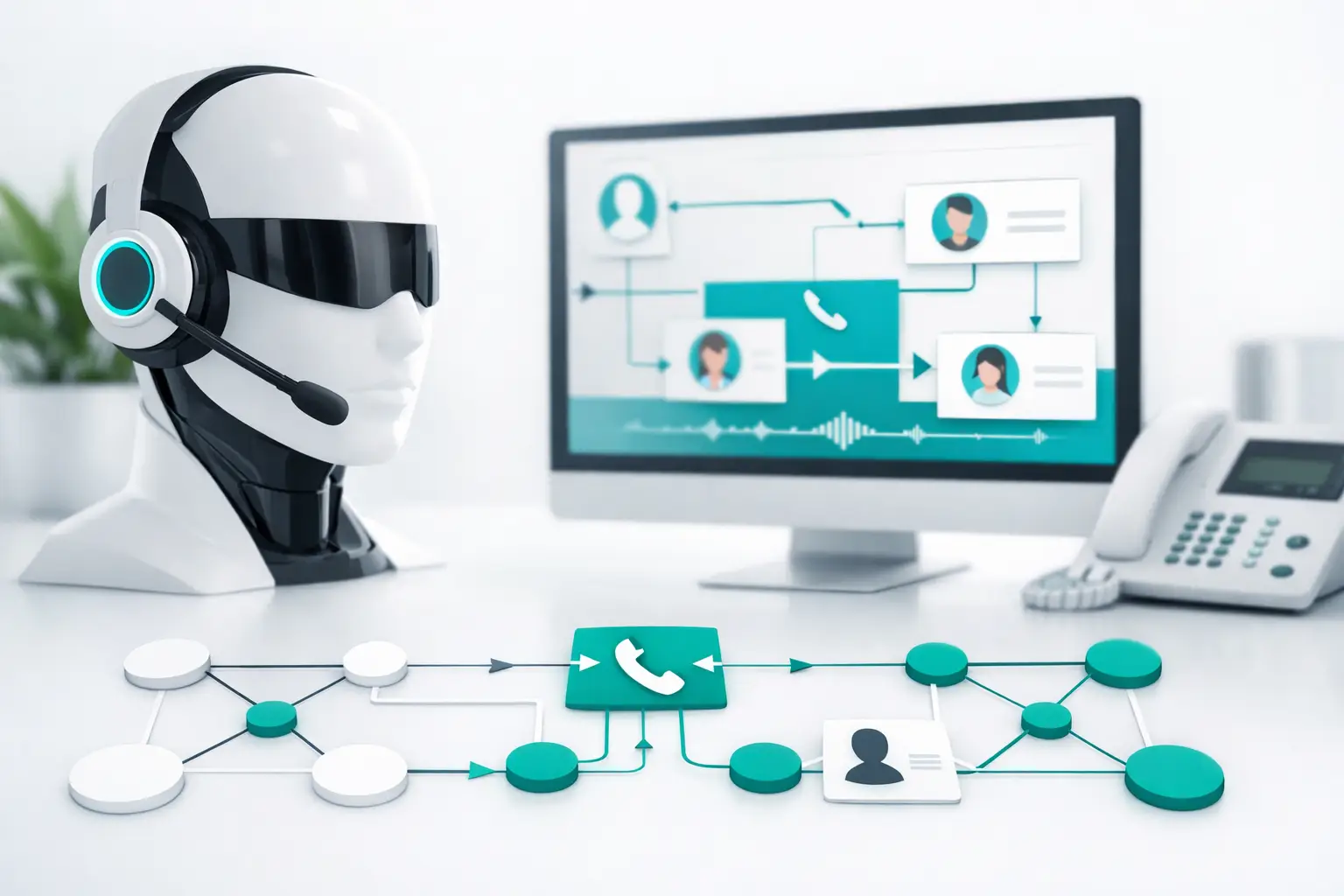
If your AI agent can answer a call but cannot decide where that call should go next, you do not have an automated operation. You have a voice bot sitting at the front door. Knowing how to route AI calls is what turns a demo into production infrastructure, especially when revenue, speed to lead, and service levels are on the line.
Most teams start with the wrong question. They ask which voice model sounds best or which provider has the cleanest latency. Those matter, but routing is where operations either hold together or fail under pressure. A strong routing design decides who answers, when AI should stay in the conversation, when a human should take over, what system gets updated, and what happens when a provider or carrier has a bad day.
How to route AI calls in production
Routing AI calls is not the same as routing human calls through a basic IVR. AI adds variability. Callers say unexpected things. Lead data can be incomplete. The same number may need different treatment based on campaign, language, business hours, account status, or intent detected mid-call.
That means your routing logic needs to combine telephony rules, AI outcomes, CRM data, and operational failover. In practice, most production setups route on five layers at once: entry point, caller context, AI decisioning, destination logic, and fallback handling.
The entry point is simple. Where did the call originate? Was it inbound to a support number, outbound from a lead follow-up campaign, or a transfer from another channel like SMS or webchat? That determines the first branch.
Caller context comes next. If the caller is an existing customer, a new lead, or a known contact with an open opportunity, the route should change. Pulling data from a CRM or lead source before the AI engages is often the difference between a useful call and a dead-end conversation.
Then comes AI decisioning. This is where the voice agent identifies intent, urgency, language, qualification status, or support category. But this layer should not carry the whole system. AI should classify and collect. Your routing infrastructure should decide what happens operationally.
Destination logic is where teams usually underbuild. A destination is not just "send to sales" or "send to support." It may mean route to a specific queue, assign a local area code number, transfer to a licensed rep in the right state, trigger an appointment workflow, launch a post-call SMS, or pause the campaign if the contact asks for a later callback.
Finally, fallback handling keeps the operation stable. If the AI provider times out, if the transfer target does not answer, or if the carrier quality drops, the call still needs a path. Good routing assumes something will fail and plans around it.
Start with the business outcome, not the call flow
The cleanest routing setups begin with a narrow operational goal. Book an appointment. Qualify an insurance lead. Resolve Tier 1 support. Reactivate a stale opportunity. If you start by mapping every possible branch, you will build complexity before you build value.
For a solar operator, the right route may be based on territory, homeowner status, utility provider, and calendar availability. For an insurance agency, the route may depend on product line, renewal date, and whether the caller needs service or a quote. For a home services team, speed matters more than nuance. If the lead is hot and the technician is available, the system should move fast.
This is where many companies overestimate what the voice agent should own. The agent should handle the conversation. Routing should remain an infrastructure function tied to systems of record and operational guardrails.
The routing signals that actually matter
To route well, you need a small set of reliable inputs. More data is not automatically better. If half your fields are stale or optional, they create false confidence.
The most useful routing signals are usually source, time, customer status, intent, language, location, priority, and availability. Source tells you whether the contact came from paid lead gen, a service number, a web form, or an outbound list. Time determines business hours, after-hours handling, and queue balancing. Customer status separates prospects from active accounts. Intent and language shape the conversation path. Location matters when coverage is regional or staffing is distributed. Priority helps high-value or urgent calls avoid a general queue. Availability decides whether the AI should transfer now, schedule later, or continue handling the call.
If you are running outbound campaigns, add attempt history and channel history. A lead who ignored three calls but replied to email may need a different route than one who answered an SMS five minutes ago. Routing across channels is often more effective than trying the same voice path repeatedly.
Where teams break routing
The most common failure is hard-coding logic inside the voice provider. It feels faster early on. Then the business changes. New campaigns launch, routing rules shift, a CRM field gets renamed, and suddenly every update requires manual edits across multiple systems.
The second failure is treating AI routing as a one-step intent classification problem. Real operations are conditional. A caller may want billing support, but only during business hours, only if the account is verified, and only if no payment plan is already active. That decision belongs in orchestration logic, not in a single prompt.
The third failure is ignoring handoff quality. If an AI agent transfers to a human without passing context, the caller repeats everything. That kills trust fast. Routing should include transcript snippets, disposition, caller data, and the reason for transfer.
The last major failure is skipping failover. Carriers fail. Numbers get flagged. Providers degrade. If your operation depends on one path, you do not have routing. You have a single point of failure.
Build the handoff before you optimize the AI
Human handoff is where routing becomes real. If the AI cannot solve the issue or the call needs human judgment, the transfer should be immediate, informed, and measurable.
A good handoff includes three things. First, the receiving rep needs context: who is calling, why they called, what the AI already confirmed, and what action is expected. Second, the routing layer should know where to send the call based on skill, geography, queue status, or account ownership. Third, the workflow after the transfer should update the CRM and reporting stack automatically.
This matters just as much in outbound as inbound. If an AI dialer reaches a qualified lead who wants a live closer, the transfer path cannot be improvised. The right rep, campaign, and call outcome need to line up in real time.
How to route AI calls across channels
Voice rarely works alone. A missed inbound call may need an SMS follow-up. An outbound AI conversation may need a calendar email. A support interaction may start on voice and finish in webchat. Routing should reflect that reality.
That means your call logic should not end when the audio stops. It should trigger the next best action based on the call result. If the lead asked for pricing, send the rep the transcript and queue a follow-up task. If the customer requested documents, initiate email delivery and log the request. If the AI could not verify identity, route the contact into a secure human review path instead of forcing the same failed flow again.
For operators running volume, this cross-channel routing is where performance compounds. You reduce dropped intent, keep context intact, and avoid the fragmented reporting that comes from juggling disconnected tools.
The stack that makes routing manageable
You need four layers working together: telephony, AI voice, business systems, and orchestration. Telephony handles numbers, carriers, transfers, and call delivery. AI voice handles conversation and classification. Business systems provide customer and lead context. Orchestration sits in the middle and decides what happens next.
Without that orchestration layer, every new workflow becomes custom engineering. That is why teams using providers like Vapi or Retell often hit an operational ceiling. The voice experience may work, but the routing, campaign logic, CRM sync, and failover are still scattered.
This is the gap an infrastructure platform should close. VoiceUni, for example, is built to sit between AI agents, carriers, CRMs, and channel workflows so routing logic can be managed operationally instead of buried in brittle point integrations.
Measure routing like an operator
Once routing is live, measure outcomes, not just call counts. Look at transfer success rate, average time to human handoff, appointment set rate by route, containment rate for AI-resolved calls, and drop-off by queue or campaign. If one route underperforms, check whether the issue is prompt quality, lead quality, queue design, or transfer latency.
Also watch exceptions. How often did failover trigger? Which numbers have degraded answer rates? Where did CRM sync fail? Operational visibility is what keeps routing from decaying quietly over time.
The best routing systems are not the most complex. They are the clearest. They know what outcome matters, what signals are trustworthy, where humans still add value, and how to recover when a dependency breaks. Build for that standard, and your AI calls stop acting like experiments. They start running like a contact center.
More from the VoiceUni Blog.

What Drives Solar Appointment Booking Results
A solar operator booking 150-plus appointments in a single week is not winning because it found a magic script. It is winning because its lead response, qualification, routing, follow-up, and reporting are operating as one system. Solar appointment booking results are usually decided in the handoffs between those st...

AI Phone Number Reputation Guide for Call Teams
A campaign can have clean data, a capable AI voice agent, and a well-built follow-up sequence, yet still underperform for one basic reason: the originating phone number has lost trust. This AI phone number reputation guide is for operators who need to protect answer rates before poor number health turns into a pipel...

AI Contact Center Software Review for Operators
An AI contact center software review should start where most evaluations fail: the live workflow, not the demo. A voice agent that can hold a convincing conversation is only one component. Revenue operations still need the right lead data, approved contact rules, routing logic, carrier capacity, CRM updates, human e...
Get new posts by email.
One email a month, no spam, unsubscribe anytime.